You
can polish the upper side of a reed. This will
prevent saliva from penetrating too rapidly, thus
degrading the reed. Put the reed on a flat surface
and seal the cut surface by rubbing it with, for
instance, the back of a teaspoon. Move towards
the tip! Just as long until the upper side is
hard and smooth.
It
is better to moisten the reed by putting it in
a glass of water than to suck on it.Wipe the reed
very clean and rinse it with water when you have
finished playing.
You
could also scrape it clean, but with care. Best
is to leave the reed overnight in a solution of
3% hydrogen peroxide, not forgetting to rinse
it with water afterwards.
Reeds
often bend. Don’t worry! It only means the moisture
is not evenly spread. It will regain its original
form.
Best
is to keep the reeds you use in a reed holder.
It has to be clamped on a flat piece of plastic
or glass.
Still,
even though you have taken good care of the reed,
it will eventually become soft and spiritless.
The only thing left is to cut the edge.
This is
however only a temporary remedy.
In
order to cut the reed it has to be very wet. Cut
small pieces at a time and test it. Ultimately,
you can’t cut off more than one and a half of
a millimeter. If necessary you can file the round
tip edge to fit the tip of the mouthpiece. (File
with a nail file from the outside inwards.)
What
can you do with reeds that don’t play satisfactory?
Try out the reed for a while (so play it in) because
the character of the reed changes,
specially when it’s new. Usually it becomes more
flexible after some time.
If
it stays capricious it is often out of balance.
There are some stiff parts in the reed or the
reed is stiff on one side. Sometimes you can see
this by holding it up against the light. You can
also hear it when you blow alternately the left-
and right side of your mouthpiece. With sandpaper
you can sometimes correct the stiff places, but
this is an art by itself! Best is to use Dutch
Rush. You will get the most effect by sandpapering
the sides of the reed at about a half to one and
a half centimeters from the tip. Always work towards
the tip. It is better to leave the thin front
piece of the tip alone. It is also better to leave
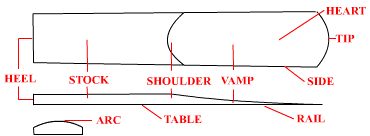
the hart (the V-form) of the tip alone; this is
the backbone of the reed. Only when the reed is
too strong for you, you can, very carefully, take
some off.
There
are also plastic an fiber reeds; these have a
constant quality and have a prolonged life. Plastic
reeds commonly sound loud and raw. A fiber reed
sounds less attractive than a cane one.
Saxophone Reed Brands a Features
Rico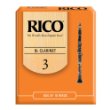
- Thinner vamp cut designed for ease of play
- Strength 2.0, Unfiled cut, box of 10 reeds
- Priced affordably for educators
- Also available for full range of clarinets and saxophones
- Also offered in 3-reed packs and 25-reed Novapak reed dispensers
- >>More on Rico Reeds
Rico Royal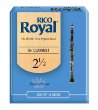
- Traditional Rico cut with a stronger spine
- Strength 2.5, Filed cut, box of 10 reeds
- Works well for both classical and jazz applications
- Also available for full range of clarinets and saxophones
- Also offered in 3-reed packs
- >>More on the Rico Royal Range
Rico Reserve Classic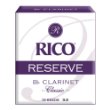
- Special cane treatment process that helps reduce reed warping
- Strength 3.5, Unfiled cut, box of 10 reeds
- Gradual tip shape, adding more tonal warmth; traditional tip thickness for a quick articulation
- Like the Reserve line, uses only the densest, lower-internode cane for longer durability and consistency
- Offered in strengths 2.0 to 4.5, including a special 3.5+ and 4.0+ strength
- >>More on Rico Reserve Classic Reeds

Rico Grand Concert Select Traditional 
- Traditional tip shape for quick response
- Strength 3.0, Filed cut, box of 10 reeds
- Traditional heel thickness for a balanced tone
- Balanced spine and tip for ease of playing
- Offered in strengths 2.0 to 4.5
- >>More on the Rico Grand Concert Select Traditional
Rico Grand Concert Select Evolution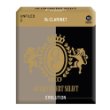

Rico Plasticover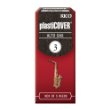
- Coated with plastic to resist changes in moisture and climate
- Strength 2.5, Unfiled cut, box of 5 reeds
- Color video inspection sorts cane quality
- Optical laser measurements ensure accuracy
- Offered in strengths 1.0 to 4.0
- >>More on the Rico Plasticover Range
Mitchell Lurie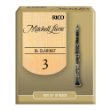
- Feature a thinner tip for easy response
- Strength 3.0, Unfiled cut, box of 10 reeds
- Color video inspection sorts cane quality
- Optical laser measurements ensure accuracy
- Offered in strengths 1.5 to 5.0
- >>More on the Mitchell Lurie Bb Reeds Range
Vandoren Traditional 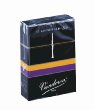
Vandoren Advanced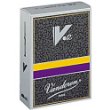
Vandoren 56 Rue Lepic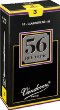
- a rich, centered, and extremely pure sound
- maximum stability and quick response in all registers
- newest addition to the clarinet reed family
- >>More on the Vandoren 56 Rue Range
La Voz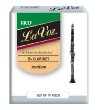
- Stronger spine for more resistance
- Medium strength, Unfiled cut, box of 10 reeds
- Works well for multiple musical styles
- Available for all saxophones and clarinet
- Available in strengths Soft to Hard
- >>More on the La Voz Bb Reed Range


Legere Reeds
- Like all Legere reeds this reed has the properties of moist cane.
- Does not have to be Preconditioned before playing
- Completely Non-Toxic
- >>More on Legere Reeds
|